
Panic attacks are sudden, intense episodes of fear or physical distress that can feel overwhelming and frightening. Many people describe the sensation as feeling like they are “losing control,” “unable to breathe,” or even “having a heart attack.” Although panic attacks are not life-threatening, they can significantly disrupt daily life and create ongoing anxiety about when the next episode might occur.
This article provides a clear, medically accurate explanation of panic attacks, how they differ from other conditions, and what steps individuals can take to manage them. It is designed to support both patients and families looking for trustworthy information in Bangkok.
What Are Panic Attacks?
A panic attack is an abrupt surge of intense fear or discomfort that reaches its peak within minutes. It can occur unexpectedly or be triggered by specific situations.
Even though panic attacks feel physical—tight chest, rapid heartbeat, dizziness—they are caused by the body’s exaggerated “fight-or-flight” response.
Panic attacks can occur as part of:
Panic Disorder
Anxiety disorders
Stress-related conditions
Hormonal or medical issues
Post-traumatic stress response
Understanding the nature of panic attacks is the first step toward effective management.
Common Symptoms of Panic Attacks
Panic attacks produce a combination of physical, emotional, and cognitive symptoms.
Physical Symptoms
Rapid heartbeat or palpitations
Shortness of breath
Chest tightness or chest pain
Sweating or chills
Trembling or shaking
Dizziness or lightheadedness
Nausea or stomach discomfort
Feeling faint
Numbness or tingling in hands or face
Emotional Symptoms
Intense fear or terror
Feeling of impending doom
Sudden wave of anxiety
Overwhelming sense of losing control
Cognitive Symptoms
Feeling detached from reality
Fear of going crazy
Fear of collapsing
Difficulty thinking clearly
Symptoms usually peak within 5–10 minutes but can leave the person exhausted afterward.
Why Panic Attacks Happen
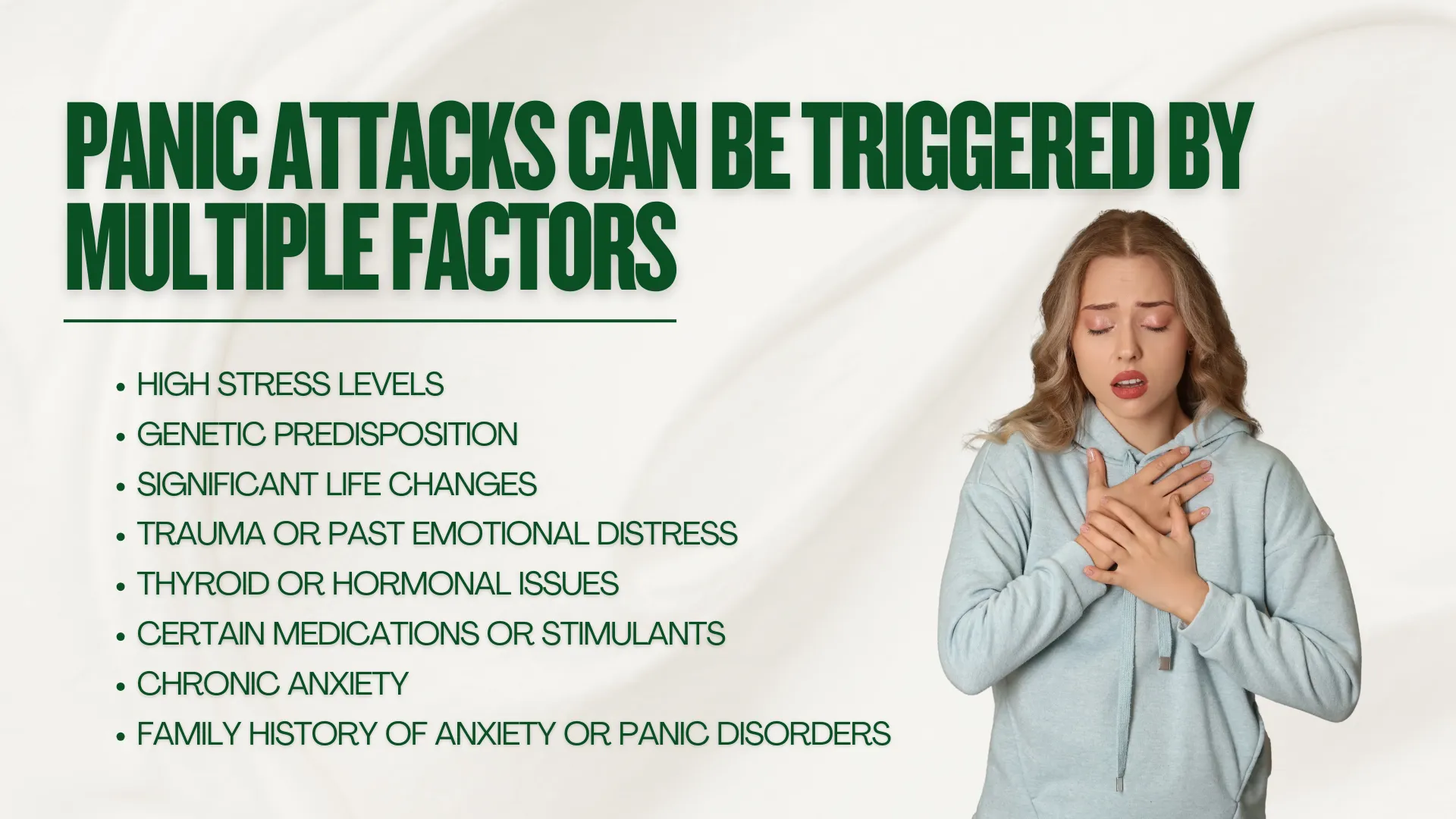
There is no single cause. Panic attacks result from a combination of biological, psychological, and external factors.
Biological Factors
Overactive stress response
Hormonal imbalance
Thyroid issues
Vitamin deficiencies
Genetics
Effects of caffeine, alcohol, or stimulants
Psychological Factors
High stress levels
Anxiety disorders
Past trauma
Major life transitions
Chronic worrying
Environmental Triggers
Work pressure
Relationship stress
Sleep deprivation
Health concerns
Crowded or closed spaces
A proper evaluation helps identify the root cause, which is essential for treatment.
Panic Attack vs. Heart Attack – How to Tell the Difference
Many patients come to clinics because panic attacks feel similar to cardiac emergencies.
Panic Attack Characteristics
Comes on suddenly
Usually resolves within 15–30 minutes
Often accompanied by fear or sense of doom
Symptoms appear even at rest
Breathing becomes rapid or shallow
Heart Attack Characteristics
Chest pain may spread to arm or jaw
Pain worsens with physical activity
Sweating and nausea common
Symptoms last longer and intensify
Often occurs in individuals with risk factors
If unsure, a medical evaluation is always recommended to rule out underlying issues.
When to Seek Medical Attention
You should consider seeing a GP or mental health specialist if:
Panic attacks occur repeatedly
They interfere with work, sleep, or daily life
You avoid certain situations out of fear
You feel constantly on edge
You are unsure whether your symptoms are medical or psychological
You experience chest pain or fainting
A doctor can distinguish between panic disorder, anxiety, thyroid dysfunction, hormonal imbalance, or physical conditions that mimic panic symptoms.
How Panic Attacks Are Diagnosed
A combination of medical and psychological assessment is used to determine the cause.
1. GP Evaluation
A general practitioner may:
Review your symptoms
Check blood pressure and vital signs
Assess lifestyle and stressors
Recommend blood tests (thyroid, vitamins, hormone levels if needed)
2. Mental Health Assessment
This helps determine:
Frequency of attacks
Severity
Emotional triggers
Thought patterns
3. Psychiatry Consultation
A psychiatrist can diagnose panic disorder and outline a customized management plan.
At MedConsult Clinic, patients who present with panic symptoms often begin with a GP consultation, followed by referral to mental health/psychiatry consultation (Dr. Pui) when appropriate, especially if psychological support or medication may be beneficial.
Treatment Options for Panic Attacks
Treatment depends on severity, frequency, and underlying causes. Evidence-based approaches include:
1. Cognitive Behavioural Therapy (CBT)
One of the most effective therapies. Helps patients:
Identify triggers
Modify anxious thinking patterns
Learn grounding techniques
Reduce fear of future attacks
2. Breathing and Relaxation Techniques
Controlled breathing helps regulate the nervous system:
Slow, deep breathing
Box breathing
Progressive muscle relaxation
3. Medication (When Necessary)
A psychiatrist may prescribe medication for:
Frequent panic attacks
Severe anxiety
Panic disorder
Coexisting depression or sleep issues
4. Lifestyle Modifications
Supportive changes include:
Regular physical activity
Reducing caffeine or stimulants
Improving sleep routine
Balanced meals
Limiting alcohol
5. Addressing Physical Contributors
If thyroid dysfunction, anemia, or vitamin deficiencies are present, treating them may reduce the frequency of panic symptoms.
Types of Panic Attacks
Expected Panic Attacks
Triggered by known stressors or specific fears.
Unexpected Panic Attacks
Occur without warning — a hallmark of panic disorder.
Situationally Predisposed Attacks
Happen in environments associated with fear or stress.
Each type requires different coping and management strategies.
Living With Panic Attacks
Many individuals with panic attacks live full, active lives with proper understanding and support. Key insights include:
Panic attacks are treatable
They do not mean something is physically failing
Learning coping techniques reduces future episodes
Professional support accelerates recovery
Avoiding situations often worsens the condition
Consistent follow-up helps prevent relapse
When to Seek Help in Bangkok
Frequent or severe panic episodes should not be ignored. If panic attacks disrupt your daily life or cause persistent fear, a medical or mental health evaluation can offer clarity and guidance.
At MedConsult Clinic, patients typically access:
GP Consultation (first assessment)
Mental Health / Psychiatry Consultation with Dr. Pui
Counselling and structured follow-up sessions
These services are designed to provide calm, supportive, and confidential care without judgment.

Doctor’s Profile
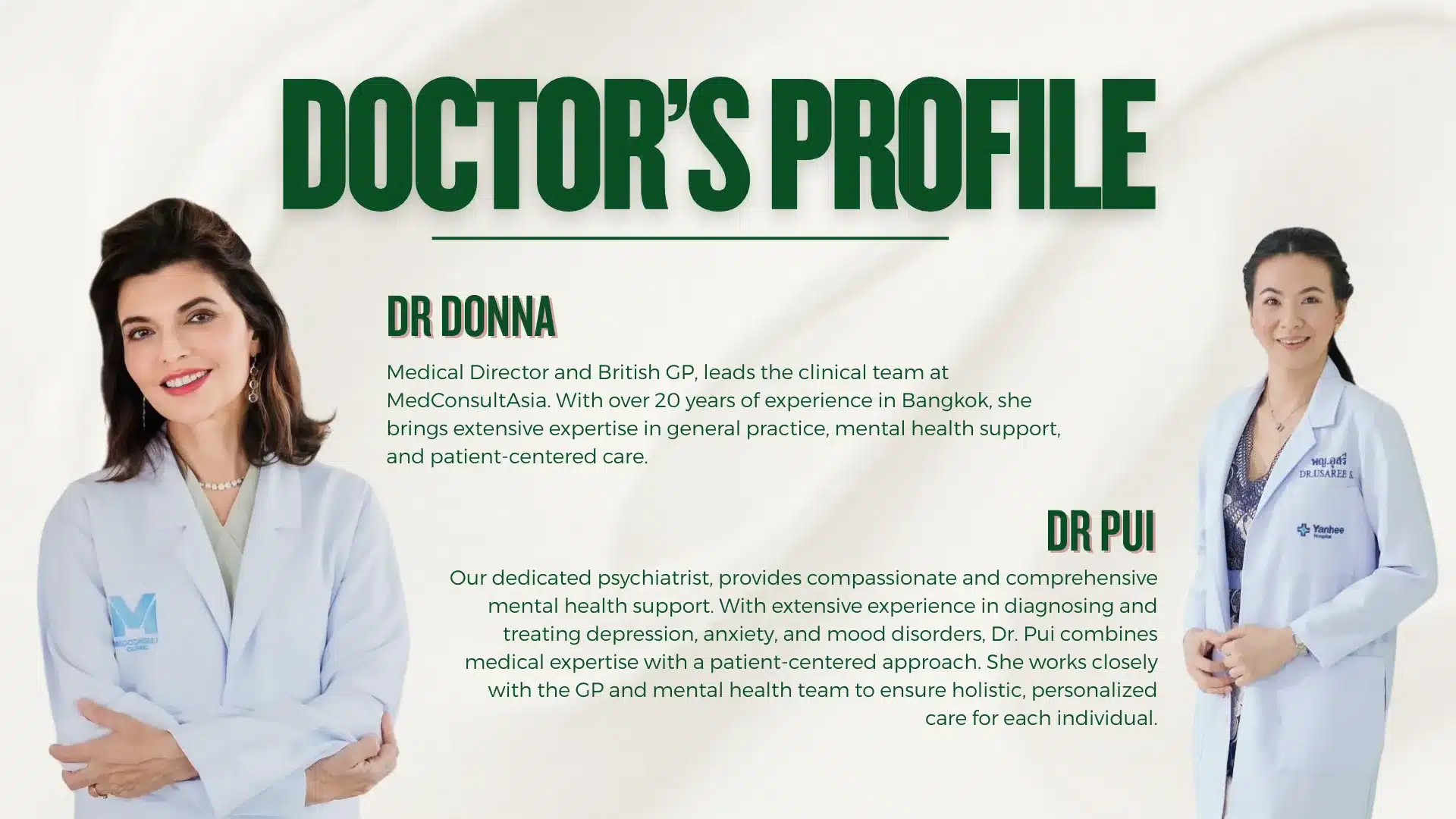
Dr. Donna Robinson, British GP and Medical Director, leads the team at MedConsultAsia. With more than 20 years of experience in Bangkok, she provides compassionate and comprehensive care across general practice and mental health support.
Dr. Pui, our psychiatrist, specializes in diagnosing and treating anxiety disorders, panic attacks, and mood-related conditions. Her calm and empathetic approach helps patients understand their symptoms and find effective strategies for long-term relief. Together, Dr. Donna and Dr. Pui offer a holistic and patient-centered approach to managing panic attacks.
Final Thoughts
Panic attacks can be frightening, but they are also highly manageable with the right approach. Understanding the signs, identifying triggers, and seeking proper assessment can significantly reduce symptoms and restore confidence. If you or someone you know is experiencing frequent panic episodes, a healthcare professional can help determine the cause and guide the next steps toward recovery.
Frequently Asked Questions (FAQs)
What are the early signs of a panic attack?
Early signs include a sudden sense of fear, rapid heartbeat, difficulty breathing, and feeling detached or overwhelmed. Many people also feel an intense sense of dread.
Can panic attacks happen for no reason?
Yes. Some panic attacks occur without an obvious trigger. Even when no danger is present, the body can activate a “fight or flight” response unexpectedly.
How do panic attacks differ from heart attacks?
While symptoms overlap, panic attacks are caused by anxiety, not heart disease. Heart attacks typically involve persistent chest pain and physical exertion triggers. A doctor evaluation helps distinguish them.
Are panic attacks dangerous or life-threatening?
Panic attacks feel frightening but are not physically life-threatening. However, they can affect daily life and mental health, making professional treatment important.